- Journal Issues
- № 1-2, (2024) Actual problems of criminal justice
- Problems of Criminal Procedure and Criminal Sciences and Operational and Investigative Activities
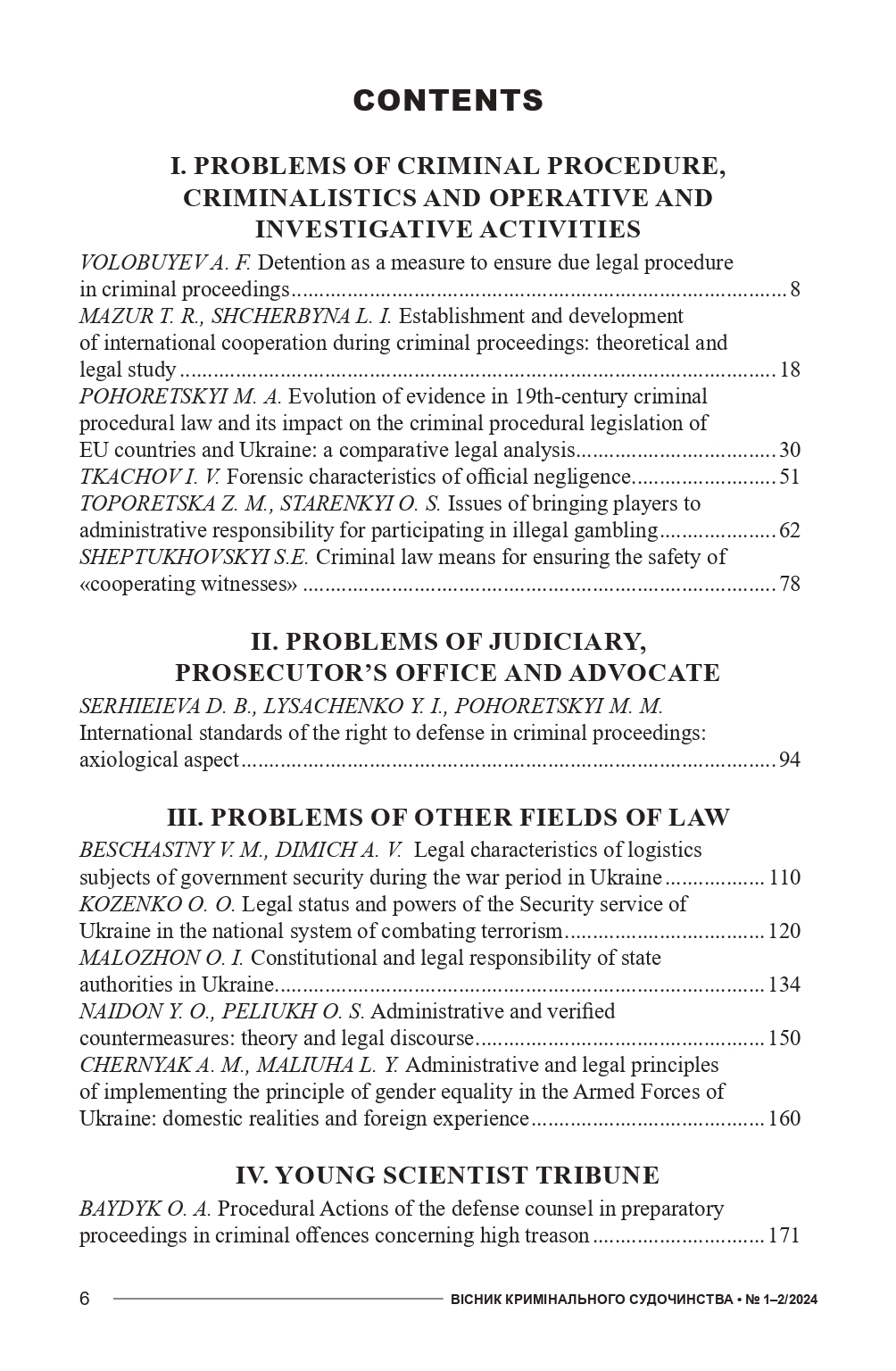
- Issues of bringing players to administrative responsibility for participating in illegal gambling
Issues of bringing players to administrative responsibility for participating in illegal gambling
Review
Since 2021, the first legal organizers of gambling and gambling establishments have been operating in Ukraine. However, Article 181 of the Code of Administrative Offenses, which provides for administrative liability for participation in illegal gambling, has not changed since 2009. Every year, hundreds of administrative cases are considered by courts, and gamblers are held administratively liable. Offenders are mainly people who do not have permanent jobs, sufficient qualifications, and do not have a high level of knowledge and education. They gamble to satisfy their private desire for gambling or try to solve financial problems, hoping to win.
The purpose of the article is to study the issue of the feasibility of holding illegal gamblers administratively liable.
The authors analyzed the composition of the administrative offense of participation in organized gambling without a permit and indicated that the object of such an offense does not correspond to the relevant section, because the player aims to satisfy a private interest – gambling, and not to violate public order or encroach on public safety. The objective side of such an offense involves only one action – participation in organized gambling without a permit, but the player does not have the obligation and necessary knowledge to distinguish legal gambling from illegal ones. As for the subjective side – the player wants to satisfy his own needs in gambling and solve his problems, he does not intend to harm public order, intentionally violate any rules of conduct or encroach on public safety. The subject of the administrative offense is a person from 16 years of age, which is extremely negative, because players in legal gambling can be persons from 21 years of age. If younger people participate in gambling, they have the right to compensate for the damage caused by the organizer, that is, they are the injured party, not the offender. As for minor players, they are victims of a criminal offense under Art. 304 of the Criminal Code of Ukraine.
The authors stated that organized illegal gambling is dangerous for players and encroaches on public safety and public order. Therefore, participation in illegal gambling should be recognized as an administrative offense only in conditions when the gambling business is prohibited in the state. In conditions of permitting the gambling business, the administrative liability of the player for participating in illegal gambling should be canceled. A player in illegal gambling should be recognized as a victim of a crime under Art. 203–2 of the Criminal Code of Ukraine. Separately, the Code of Administrative Offenses, by analogy with the requirements for lotteries, should be supplemented with a norm on the administrative responsibility of a person under 21 to participate in a gambling game, which is a prospect for further scientific research.
Keywords: administrative responsibility, gambling, gambling business, participation in illegal gambling, the composition of an administrative offense.