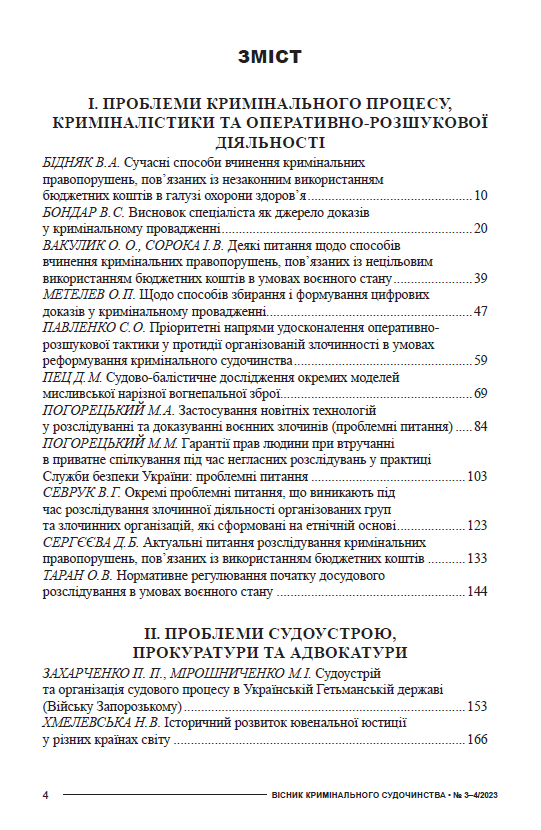
REGARDING METHODS OF GATHERING AND FORMING DIGITAL EVIDENCE IN CRIMINAL PROCEEDINGS
Pages: 47-58
Year: 2023
Location: Pravova Ednist Ltd
Дата публікації: 28.01.2024
Keywords
criminal proceeding, digital (electronic) evidence, evidence gathering methods.
Review
The given article studies specifics and peculiarities of the ways and methods used to gather and form digital evidence data in pre-trial investigation and trial proceeding, as well as analyses the status of current scientific elaboration of the problem. The analysis carried out by the author of the article shows that evidence in digital form, particularly during the russian aggression against Ukraine, comprises a significant part of evidence materials in criminal proceedings. Under such circumstances, it is required to introduce a more efficient approach to digital evidence use in criminal procedure. The author emphasizes that gathering (obtaining) and forming of evidence in criminal proceeding is performed by probative subjects (a prosecution party and a defence party) in a specific form of action. In the course of legal proceedings, a probation subject, while establishing the circumstances (facts) in criminal proceeding through the evidence, is moving from perceiving some facts, information about them (the sensual and practical aspect of cognition) to logical comprehending the perceived information (gnoseological aspect of cognition). The article states that the probation process must include different elements, common for information as well as other approaches to the theory of proofs: gathering, consolidation, verification, assessment, logical justification, etc. It also stresses on inevitable tailoring of classical criminal and procedural system to digital reality. The author concludes that some issues related to the procedure and peculiarities of gathering evidence as well as methods of examining and forming digital data, which further will gain the trial evidence status, have not been regulated in the criminal and procedural legislation. This drawback greatly complicates practical use of digital information while establishing retrospective circumstances of a criminal offence. Taking into consideration a specific gnoseological and legal nature of digital (electronic) evidence, the author offers to distinguish its gathering (obtaining) methods in a separate procedural category.