- Journal Issues
- № 3-4, (2024) Actual problems of criminal justice
- Young scientist tribune
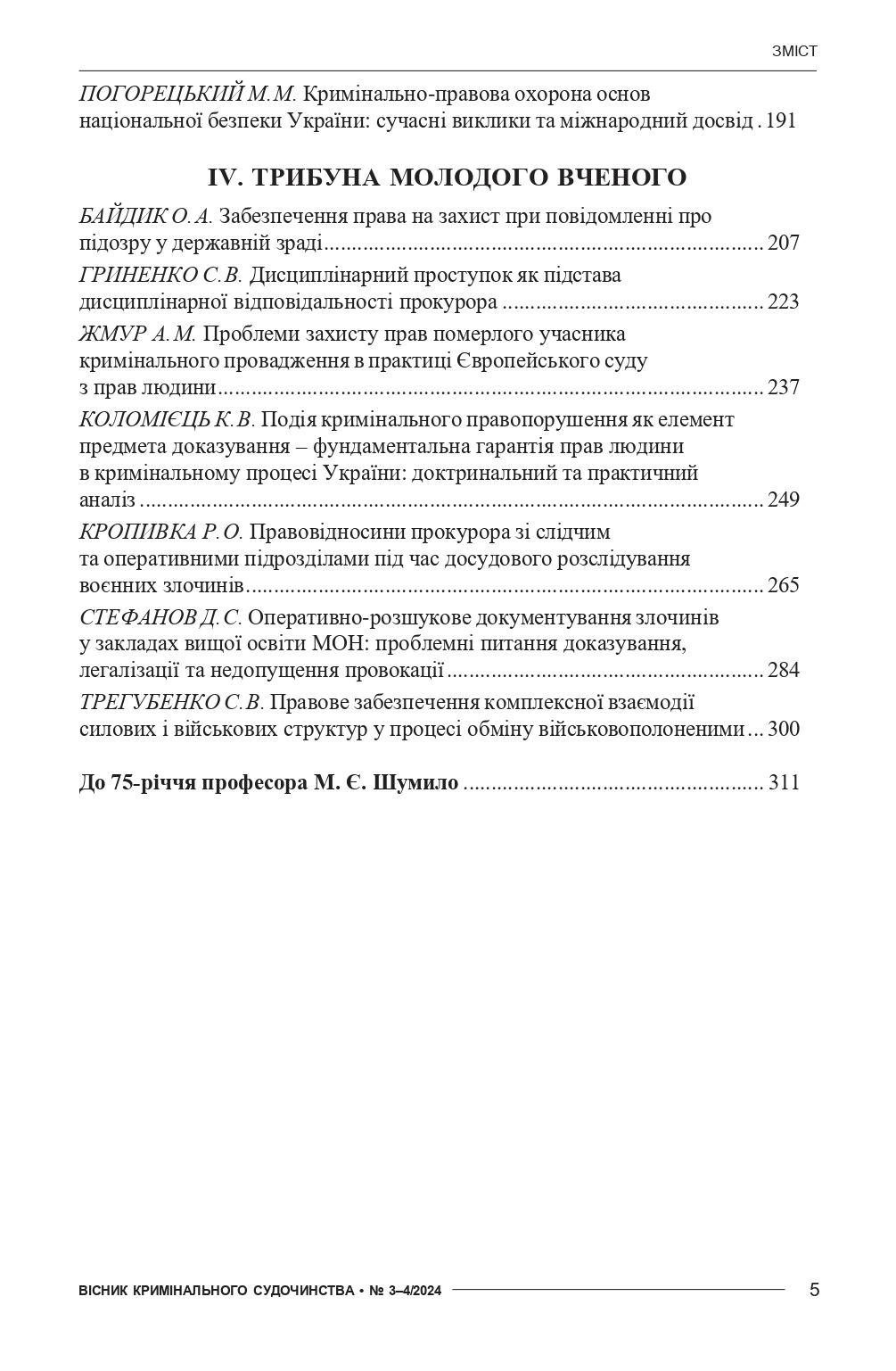
- Problems of Protection of the Rights of Deceased Participants in Criminal Proceedings in the Case Law of the European Court of Human Rights
Problems of Protection of the Rights of Deceased Participants in Criminal Proceedings in the Case Law of the European Court of Human Rights
Review
The topic of the article was chosen due to the intention to comprehensively reveal the key aspects of ensuring both the rights of a victim of a criminal offence and a person subject to criminal proceedings in the event of their death, in the light of the current legal positions of the European Court of Human Rights (ECtHR). With this in mind, the study clarifies, on the one hand, the conceptual content of the state’s procedural positive obligation regarding the fundamental right to life, identifies and reveals the main criteria for an effective investigation (namely, independence, reasonable speed and efficiency of the investigation, its adequacy and thoroughness, as well as ensuring public control and involvement of close relatives in the investigation) using the examples of the ECtHR judgments. On the other hand, the author analyses the main elements of the right to a fair trial in terms of observance of the rights of a deceased suspect or accused person, and on this basis formulates the standards arising from the approaches of the ECtHR.
In particular, the following standards arising from the ECtHR approaches are proposed: (1) The trial of a deceased person, the subject of which is to decide on his or her guilt and conviction, contradicts the general idea of fair trial and the principles that guarantee it; (2) A fair trial after the death of a suspect/accused can take place solely for the purpose of rehabilitation of such a person; (3) The conviction and sentencing of a person cannot outlive the deceased suspect or accused, as this is incompatible with the presumption of innocence; (4) Imposing criminal liability for the actions of a deceased suspect or accused on his or her heirs would also violate the guarantees of the presumption of innocence arising from Article 6(2) of the European Convention on Human Rights.
The general philosophical basis of the study was formed by the axiological and hermeneutical approaches. In particular, the first made it possible to carry out a value-based analysis of the fundamental human right to life, as well as to assess the impact of the death of a suspect or accused on the exercise of the fundamental right to a fair trial. Instead, the second allowed for an in-depth study and interpretation of certain provisions of the ECHR and the legal texts of the ECtHR judgments. When building a system of standards based on the Court’s legal approaches, we used the systemic and structural method, as well as the method of logical research and the method of legal modelling.
Key words: right to life, right to a fair trial, procedural obligations, effective investigation, European Court of Human Rights, closure of criminal proceedings.